
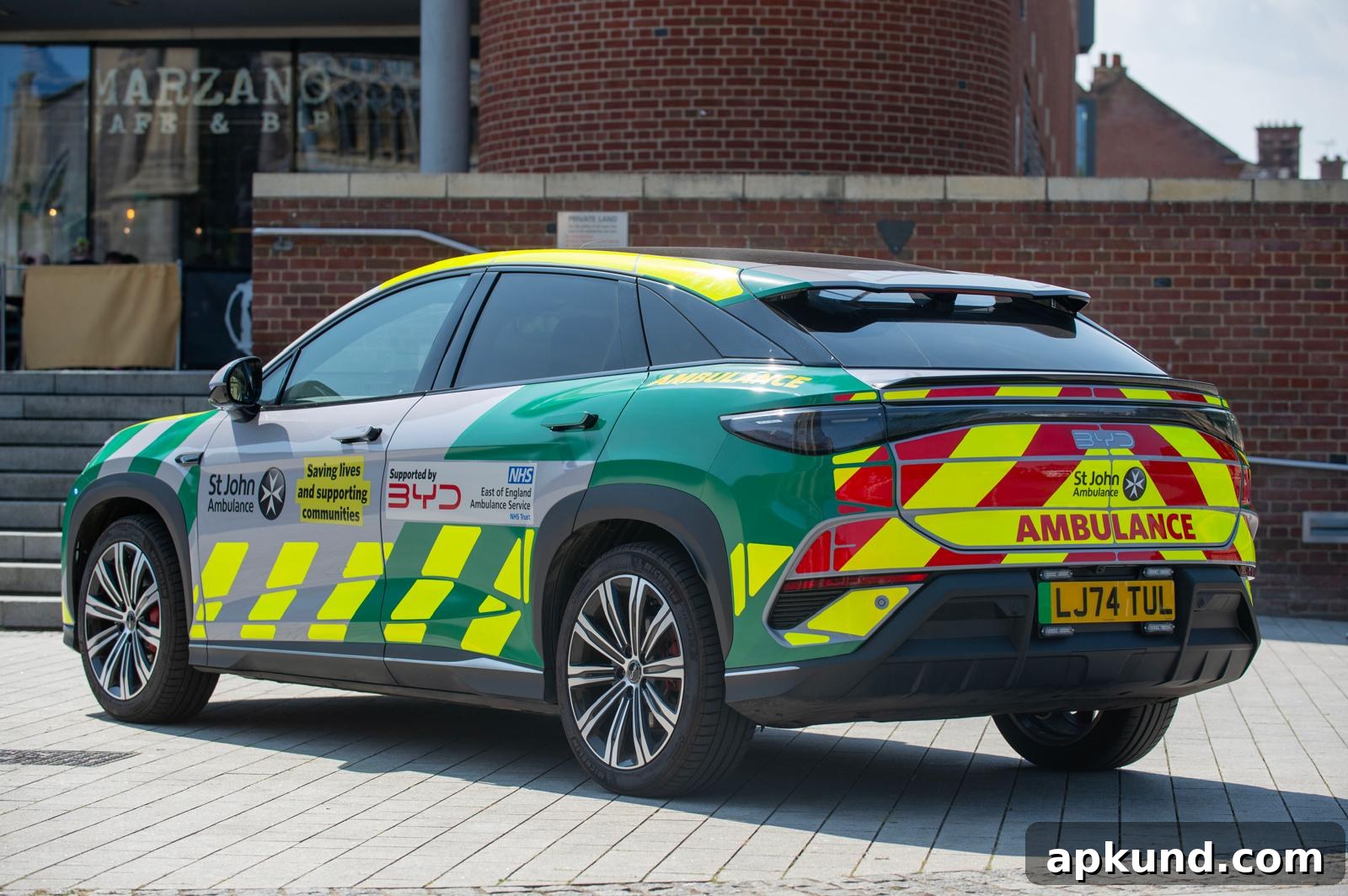
Chinese electric vehicle manufacturer BYD has been active recently. After unveiling several new models earlier this month, the company has announced a collaboration with St John Ambulance in the United Kingdom for a six-month pilot using its fully electric BYD SEALION 7 as a medical response vehicle.
The pilot will run in partnership with the East of England Ambulance Service NHS Trust (EEAST) and will deploy trained volunteer crews across Norfolk. These volunteer co-responders will provide early clinical assessment and urgent care at scenes before standard ambulance units arrive, helping to stabilize patients and deliver immediate treatments where appropriate.
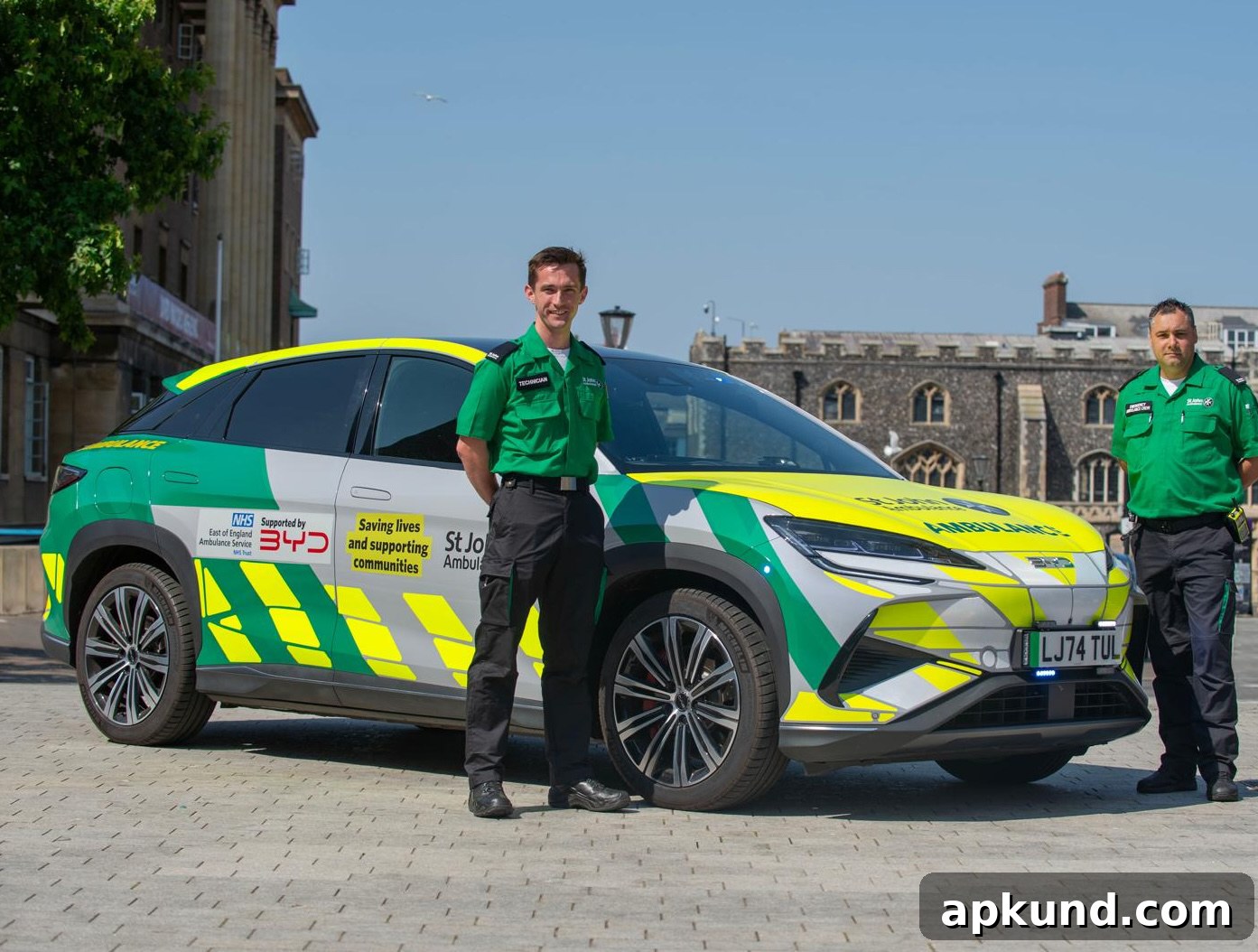
BYD says the trial is designed to measure patient outcomes and assess the broader impact on emergency services, with the possibility of extending the programme to other parts of England if results are positive. For the pilot, the company will provide a SEALION 7 fitted with emergency livery and blue lights, adapted for frontline response work. The vehicle’s sizeable 520-litre boot space will accommodate essential medical equipment such as defibrillators, medications, oxygen cylinders, and other life-support supplies that responders need when arriving first on scene.
One of the key aims of the pilot is to relieve pressure on NHS ambulance resources by ensuring volunteer crews can reach patients quickly and provide effective on-scene care. By dispatching co-responders who attend the majority of callouts rapidly, the programme seeks to treat and, where safe and appropriate, discharge patients at the scene without requiring a full ambulance conveyance. This model can reduce strain on emergency transport resources and free up ambulances for the most critical cases.
We are immensely grateful to BYD for loaning a fully electric response car. Having a dedicated response vehicle for this pilot is essential to ensuring our volunteers can reach patients quickly and begin care at the earliest possible moment. This scheme is about working in partnership with our NHS colleagues to provide additional support where it is most needed, helping to improve outcomes for patients while also easing pressure on frontline resources.
Tom Willis, Head of Clinical Standards for St John Ambulance, highlighted the importance of fast, reliable transport for volunteers and noted how a dedicated response vehicle helps them start assessments and interventions sooner. Early intervention can be critical in many emergency situations, and having the right equipment on hand increases the chances of a positive outcome for patients.
The trial will collect data on several fronts: response times, patient outcomes, on-scene treatment rates, and the potential reduction in ambulance callouts. Evaluators will also look at operational considerations such as vehicle range, charging logistics, crew comfort and safety, and equipment storage and accessibility within the vehicle. These practical factors will influence whether the model is scalable and suitable for wider rollout.
If the pilot demonstrates sustained improvements in response times and care delivery, the findings could support a case for expanding zero-emission response fleets more broadly across the UK. Wider adoption of electric response vehicles could help NHS and volunteer services meet environmental targets while modernising their fleets. At the same time, careful evaluation will be important to ensure that charging infrastructure, vehicle suitability for varied terrain and weather, and equipment requirements are all adequately addressed.
The collaboration between BYD and St John Ambulance reflects a growing interest in electrifying emergency response vehicles and testing how new mobility solutions can integrate into existing healthcare systems. The six-month pilot in Norfolk will provide practical evidence about how electric vehicles can perform in real-world emergency settings and whether they can deliver both clinical and operational benefits.