
Google Overhauls Gemini with Neural Expressive Design and Gemini Live
If there’s one clear takeaway from this year’s I/O announcements, it’s that Google has significantly upgraded Gemini into a more interactive, media-forward assistant. The update shifts Gemini away from a conventional, text-heavy chatbot experience and toward a dynamic, multimodal assistant that blends text, voice, visuals, and real-time interactivity.
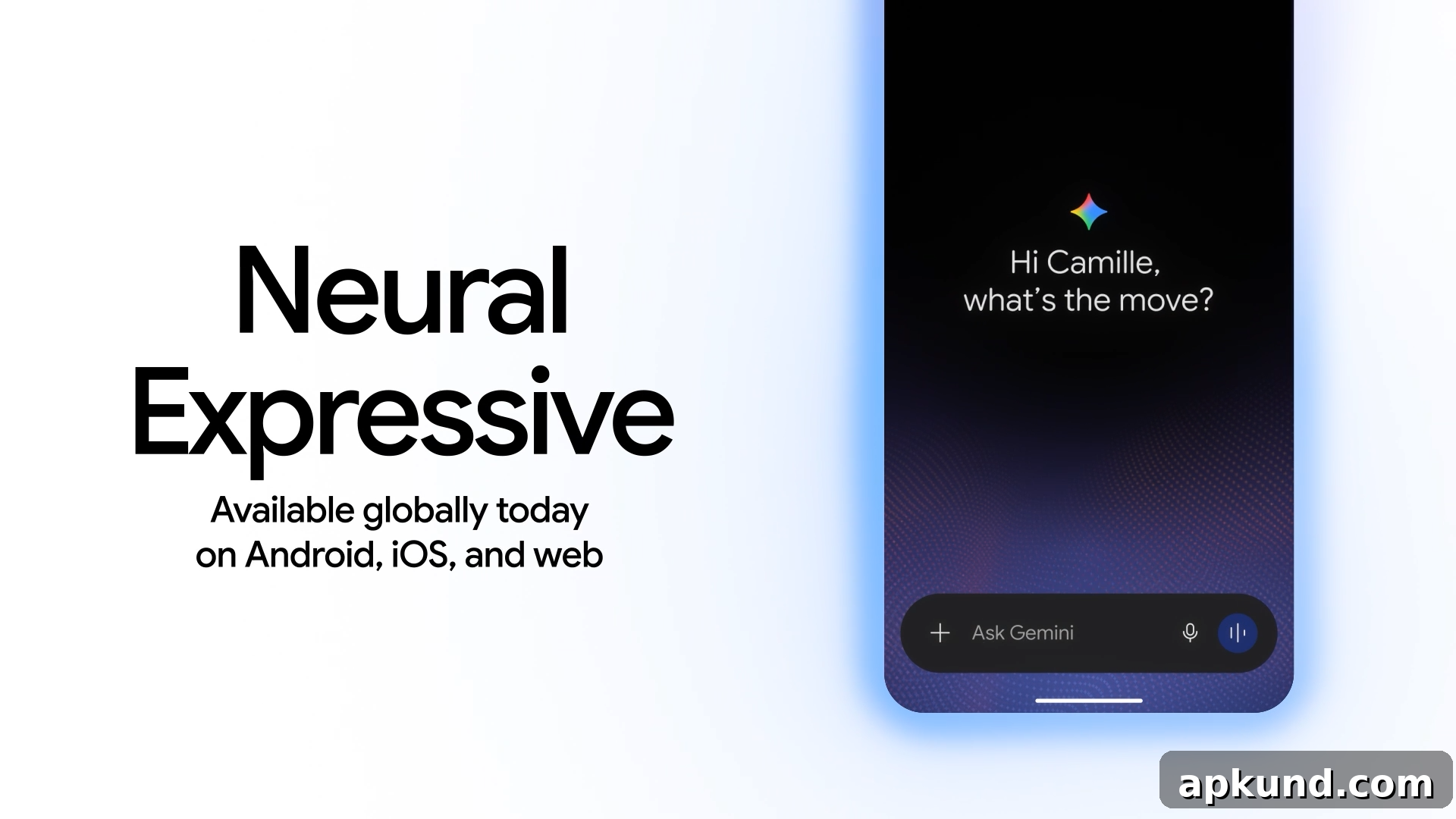
The revamped app introduces a new visual and interaction approach Google calls “Neural Expressive.” This design system replaces the familiar linear chat log with a fluid interface that emphasizes vibrant color treatments, refreshed typography, and richer tactile feedback on mobile devices. The result is an experience meant to feel more like a personal, always-on assistant than a simple messaging window.
Rather than returning long blocks of text, Gemini now structures answers in a layered, digestible format. Responses are generated in real time and can include key facts, embedded images, narrated video segments, interactive timelines, and dynamic data visualizations. This makes it easier to understand complex topics at a glance while still offering deeper detail when you want it.
One of the most notable functional changes is the full integration of Gemini Live into the main chat experience. Users can switch seamlessly between typing and speaking without losing the conversational context. The integration aims to remove friction between interaction modes: you can start a query with text, continue with voice, and return to text responses without repeating context or reloading the conversation state.
Audio capture and handling have also been refined. Improved voice detection lets users pause and resume naturally while formulating thoughts, reducing interruptions and premature cutoffs. This is especially useful when brainstorming, iterating through multi-step problems, or conducting hands-free workflows. Google plans to expand voice options with localized dialects and additional voice variations so users can choose a voice that feels familiar and natural in their region.
These changes reflect a broader trend toward making AI assistants more capable of handling varied media types and multi-turn reasoning in ways that match human conversational habits. The emphasis on expressive visuals, short-form multimedia, and smoother voice transitions positions Gemini as a more versatile tool for both quick answers and extended tasks such as research, planning, and creative work.
From an accessibility and usability standpoint, the Neural Expressive design aims to improve comprehension for visual learners and to offer clearer hierarchical cues for complex information. Interactive elements like timelines and dynamic graphics allow users to explore data at their own pace, expanding or collapsing content depending on how much detail they need. The combination of narrated clips and visual summaries should also help users who prefer auditory resources or who need hands-free assistance.
Google says the new design language and conversational features are rolling out globally and will be available across web, Android, and iOS platforms. The rollout brings the visual refresh, multimedia response formats, and Gemini Live’s voice integration to a wide audience, enabling cross-platform continuity so conversations started on one device continue smoothly on another.
Overall, the update makes Gemini feel less like a traditional chatbot and more like an intelligent, multimodal companion. By blending real-time media, improved voice handling, and a fresh visual identity, Google aims to offer an assistant that can handle both quick information needs and longer, more interactive tasks with fewer breaks in context or workflow.