
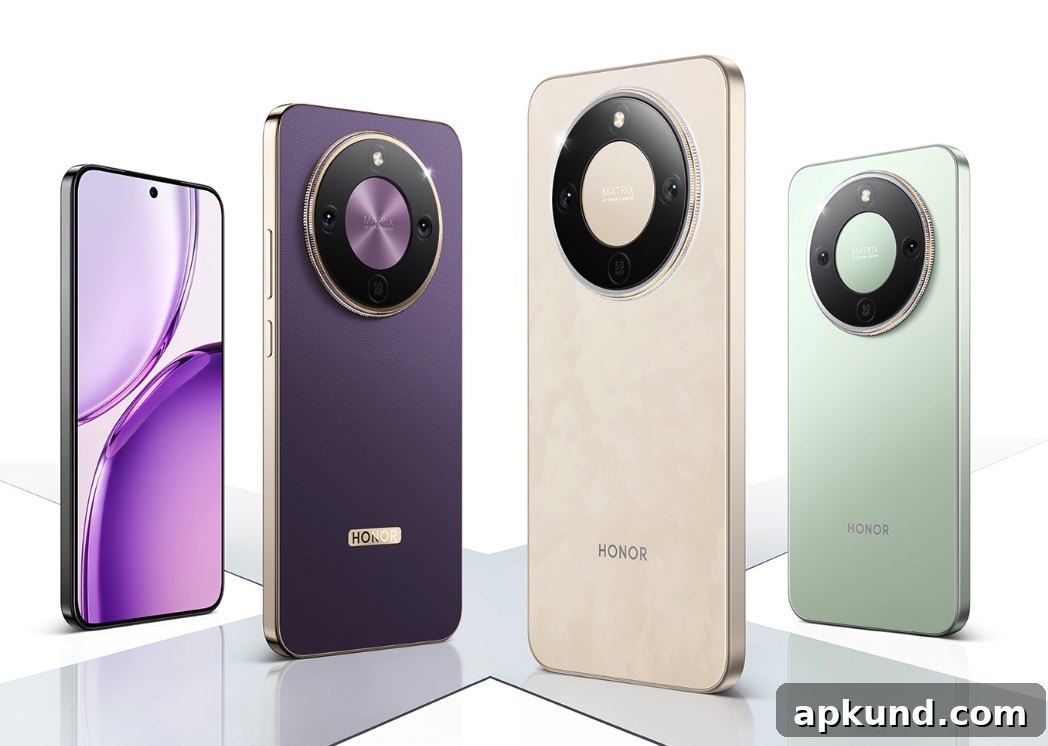
Honor’s pursuit of ever-larger battery capacity in smartphones continues to evolve. After shipping a 10,000mAh device earlier this month, reports now suggest the company—or another major manufacturer among the top five—may be testing a handset with a 14,000mAh battery. The rumor originates from a social post by a well-known tipster, who placed the device in the New Product Introduction (NPI) stage. That stage indicates early validation and internal testing, not a guarantee of commercial release. Many devices enter NPI only to be refined, delayed, or canceled during internal review.
The context around this rumor makes it plausible. Honor recently launched the Win Turbo in China with a 10,000mAh cell, and the X80 Pro Max already ships with an 11,000mAh battery. Both models use silicon-carbon battery technology, which increases energy density compared with traditional lithium-ion cells. That technology allows manufacturers to squeeze more capacity into a given volume, enabling unusually large batteries without a proportional increase in thickness.
To put a 14,000mAh battery into perspective: it would carry roughly three times the capacity of many current flagship phones, such as the iPhone 17 Pro. That larger cell would translate to dramatically longer standby and active use times, especially for power-hungry tasks like gaming, video streaming, and extended navigation. A report associated with the rumor estimates the hypothetical 14,000mAh phone could weigh around 220 grams. That is heavier than most mainstream handsets, but it aligns with the weight of other large-battery devices from Honor and similar brands that prioritize endurance over featherlight design.
Past accuracy from the same tipster adds weight to the claim. In August of last year, the same source reported a brand testing a 10,000mAh phone at the same NPI stage; that early tip later materialized into a shipping product. Still, a successful past prediction is not proof that every test or rumor will become reality—phone development is an iterative process and many prototypes never reach store shelves.
Another consideration is regional availability. Honor’s largest battery phones tend to be released first, and sometimes exclusively, in China. International variants often ship with smaller batteries tuned for local market expectations, regulatory requirements, or carrier constraints. It remains unclear whether a phone built around a 14,000mAh cell would be offered globally, or whether it would remain a China-only model focused on buyers who prioritize extreme battery life.
Practical questions also surround a device with such a massive battery. Engineers must balance capacity against thermal management, charging speed, chassis durability, and ergonomics. Larger batteries typically require thicker enclosures or innovative internal layout changes. Fast charging systems capable of refilling a 14,000mAh cell quickly without overheating would be essential to preserve a good user experience. Likewise, software optimizations and efficient components would be needed to make that capacity meaningful in daily use rather than simply increasing weight.
Consumer demand will determine the market for ultra-high-capacity phones. Some users—mobile gamers, frequent travelers, field workers, and anyone who values multi-day battery life—would welcome devices that dramatically extend time between charges. Others prefer lighter, slimmer phones and are willing to accept more frequent charging in exchange for a thinner design and more compact feel. Manufacturers must decide whether to invest in niche, high-capacity models or to focus on the broader market segment that favors balanced specifications.
For now, the story remains a rumor: an early-stage test that could either be refined into a final product or quietly dropped. If a 14,000mAh phone does reach market, it would represent one of the largest batteries ever offered in a consumer smartphone, and it would likely prompt fresh conversations about the trade-offs between battery capacity, device weight, charging speed, and overall design. Until an official announcement or certification appears, prospective buyers should treat the report as an intriguing possibility rather than confirmed news.
Why this rumor sounds believable
Honor’s recent moves in the battery space give credibility to the claim. The company has already demonstrated the ability to manufacture and ship phones with far higher capacity than typical flagships by adopting advanced battery chemistry and engineering. Combined with prior tip accuracy and the ongoing development of energy-dense cells, the emergence of a 14,000mAh device is technically feasible. Whether it will be produced at scale, sold outside China, or adopted by mainstream consumers will depend on engineering outcomes, strategic priorities, and market demand.