
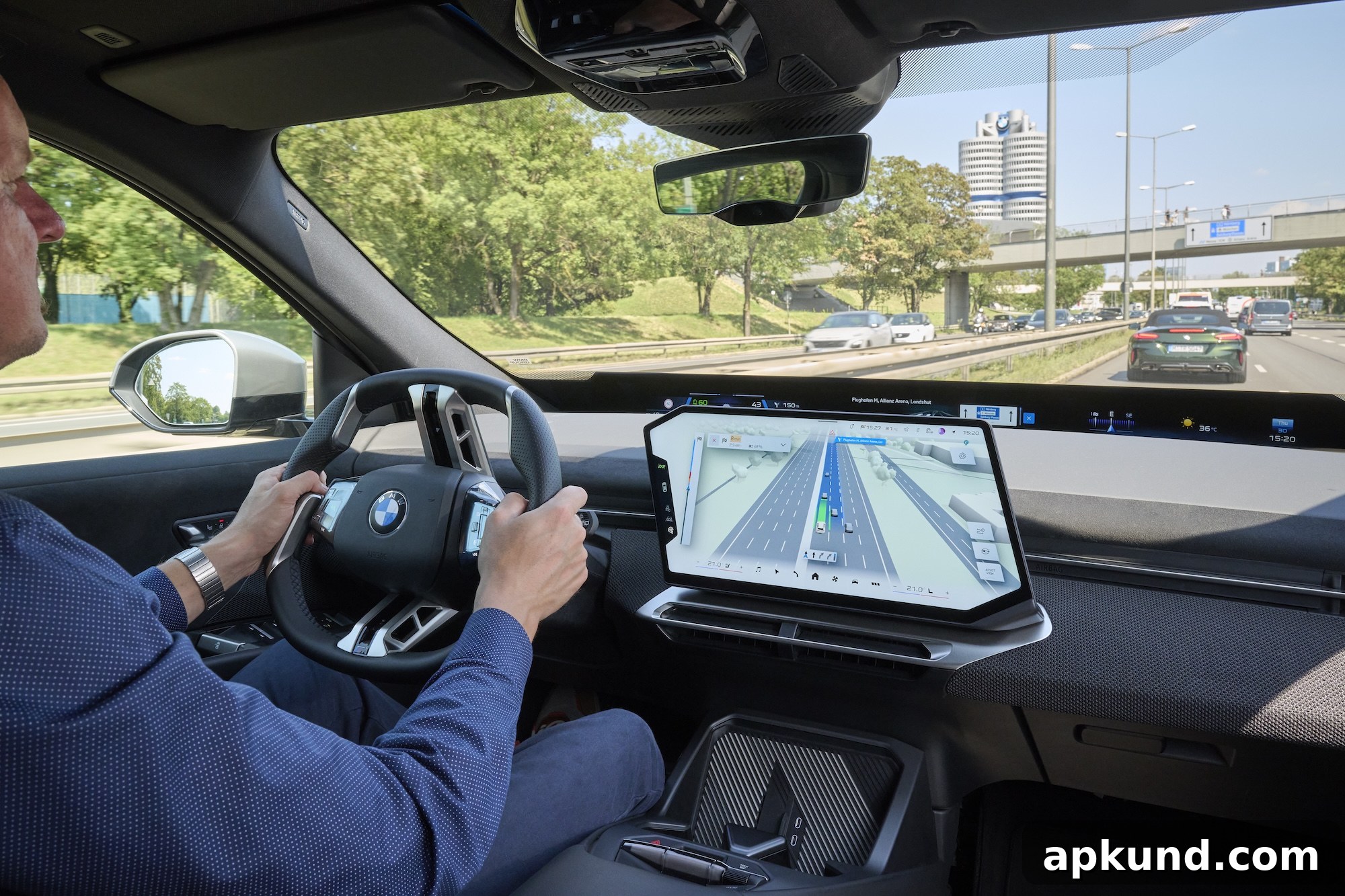
BMW is introducing a significant software update intended to combine navigation, the vehicle’s perception of its surroundings, and driver assistance into a single, intuitive 3D display. The company says this update will begin rolling out in October and will be available for vehicles equipped with BMW’s Operating System X.
For this new display, BMW has partnered with Mapbox to enhance mapping accuracy and visualization. The collaboration enables the system to position the driver’s vehicle precisely within its lane and relative to the road surface on the central screen. That lane-level accuracy is presented in a three-dimensional perspective, giving drivers a clearer and more immediate understanding of how the car interprets its environment.
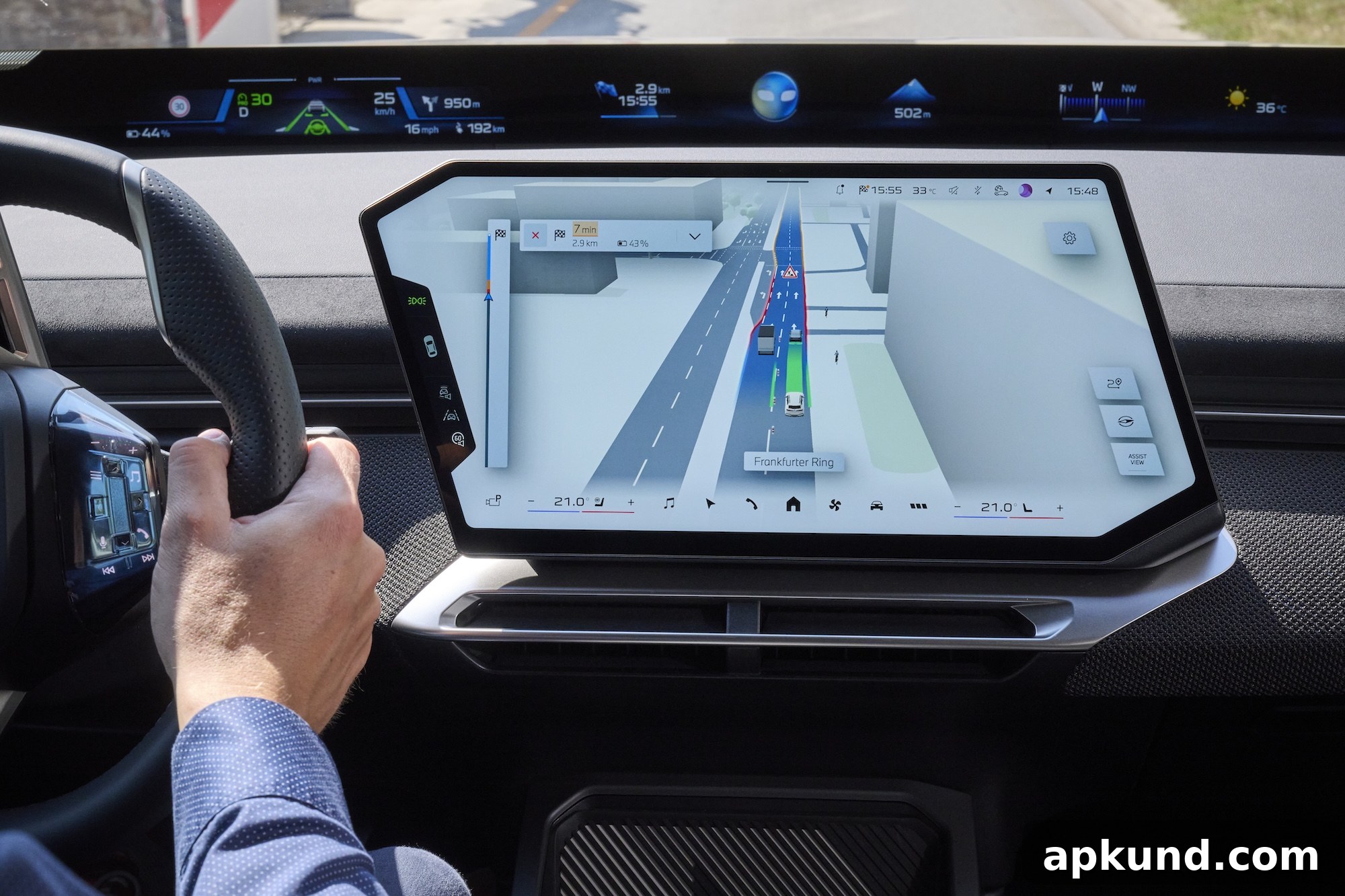
The redesigned interface aims to make semi-automated driving features more transparent by visually explaining what the car detects and how assistance systems respond in real time. During complex urban maneuvers or highway travel, the 3D view clarifies nearby traffic, lane boundaries, and relevant road features so drivers can better understand the vehicle’s active assistance decisions. The result is intended to increase driver confidence and situational awareness whenever assistance functions are engaged.
Among the advanced capabilities supported by this update is BMW’s Highway Assistant, which enables hands-free driving at speeds up to 130 km/h and supports automated lane changes initiated through a driver’s glance. By integrating navigation data, lane-level positioning, and sensor-based perception in a single visual space, BMW Maps with Driver Assistance highlights how route guidance and assistance systems interact to navigate a stretch of road safely and efficiently.
READ: BYD Expands its UK Coverage with a Network of 138 New Repair Centers
BMW also says the update is a step toward expanding navigation-guided, semi-automated driving into urban environments. The company plans to begin deploying these urban capabilities in 2027, initially in Germany. This planned extension into cities reflects a broader industry trend toward increasing automation in more complex driving scenarios, where the system must contend with pedestrians, cyclists, parked cars, and denser traffic flows.
“An important step toward highly automated driving is the intelligent interaction between navigation and driver assistance. BMW Maps with Driver Assistance¹ shows drivers how route guidance, environmental perception, and assistance functions work together. This provides better orientation when driver assistance is active—developed by the BMW Group in collaboration with Mapbox.”
The update focuses on clarity and usability rather than adding unnecessary complexity. By consolidating routing, environmental data, and active assistance visuals into one coherent 3D presentation, BMW seeks to reduce driver confusion about what systems are doing and why. Clear visual cues on the central display indicate active assistance modes, planned maneuvers, detected obstacles, and the vehicle’s intended path, which can help drivers make informed decisions about when to take over control.
From a practical perspective, the rollout for compatible vehicles running Operating System X means owners should expect an over-the-air or dealer-delivered software update depending on individual vehicle settings and regional availability. BMW’s staged rollout approach typically aims to ensure stability and reliability as new features are enabled across different models and markets.
Privacy and safety considerations remain central to the deployment of advanced driver assistance features. BMW’s public materials emphasize that the system’s visualizations are derived from onboard sensors and high-resolution map data, presented to help drivers understand system behavior without substituting for driver responsibility. The company frames the update as an aid for better orientation and safer interaction with semi-automated functions.
In short, BMW’s new 3D mapping and driver assistance integration aims to make semi-automated features more intuitive, provide clearer feedback about what the car detects and plans to do, and pave the way for expanded, navigation-guided automation in urban settings in the years ahead. Owners of vehicles with Operating System X should watch for the October rollout announcements and any follow-up communications about regional availability and installation procedures.