
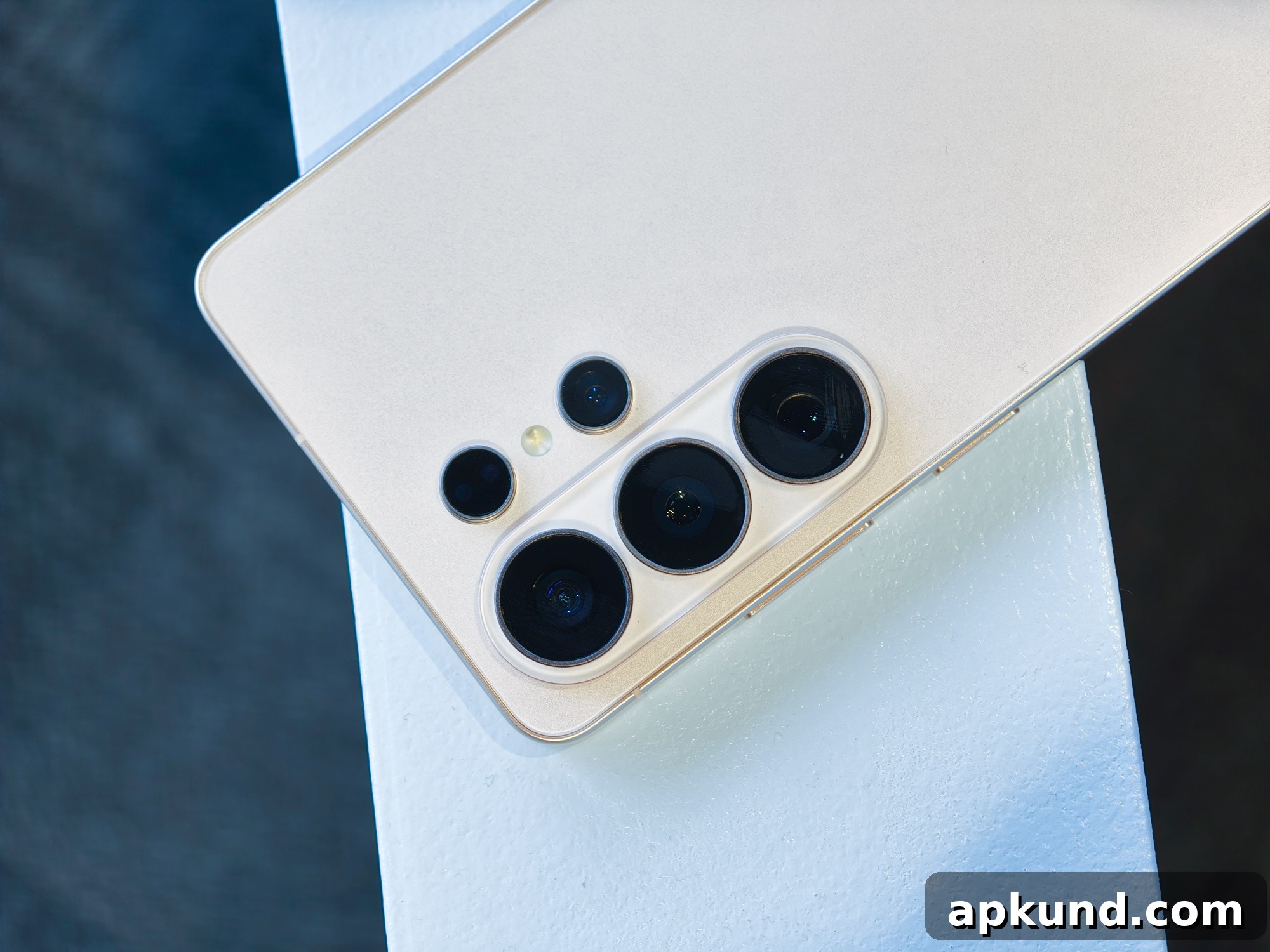
Samsung’s next flagship phone may adopt a noticeably different rear design, according to a new set of leaked images. The leaks suggest a substantial revision to the camera layout for the Galaxy S27 Ultra, a device expected to arrive in early 2027.
Rather than the distinct circular camera rings Samsung has used for several generations, the images show multiple lenses grouped together inside a single raised rectangular module. If accurate, this would mark a larger visual departure than Samsung normally makes between model years and could change how the phone looks and feels when placed on a flat surface.
What’s actually changing
Multiple respected tipsters have shared versions of this design, including well-known leakers in the industry. According to these sources, Samsung would move away from the separate ring design where each lens sits in an individual housing. Instead, the cameras would be consolidated into one unified module that contains several lenses together in a single frame.
The leaked images vary: some mockups show a horizontal camera bar similar to those used by other Android manufacturers, while others present a more rectangular block with lenses arranged unevenly inside it. Visually, the concept resembles the broader camera bars found on recent smartphones, including the camera bar styling Apple introduced on the iPhone 17 Pro models. That similarity is notable given the frequent back-and-forth between Samsung and Apple fans about design influence.
The leaks also suggest the S27 Ultra could be offered in multiple sizes. Whether the shared camera module will appear across the entire Galaxy S27 line or be limited to the Ultra model remains unclear from the images alone.
Design history and prior reports
This isn’t the first time a wide camera bar design has been linked to upcoming Galaxy phones. Earlier reports in 2025 hinted that a similar camera bar was considered for the Galaxy S26 Edge, a model that was ultimately canceled. It appears Samsung may have preserved the design concept and is now revisiting it for the S27 generation rather than discarding it entirely.
Why Samsung might make the switch
Changing to a single raised camera module can offer practical benefits beyond a fresh aesthetic. Grouping lenses together into one area can make a phone sit flatter and more stable on a table, reducing the wobble that occurs with uneven camera bumps. That stability improves the everyday experience when typing or tapping on a desk surface.
A consolidated camera module could also free internal layout space, potentially making room for features that are currently absent from Galaxy Ultra phones. For example, the new module arrangement might allow for magnetic wireless charging or improved internal components without increasing the phone’s overall thickness.
However, not everyone is convinced the new look is an improvement. Early reactions online are mixed: some observers describe the leaked module as bulky, while others compare it unfavorably to rival devices. Even the leakers who shared the images have noted that the design could provoke backlash. Whether opinions soften once official photos and hands-on reviews are available is uncertain.
What to expect next
Samsung has not confirmed any of these details. Leaks typically stem from early prototypes, supply chain drawings, or internal concept renders, and designs often evolve multiple times before a final production model is locked. As a result, the leaked camera module should be treated as an early look rather than a guaranteed final decision.
Industry watchers will be watching for additional photos or corroborating information from component suppliers and manufacturing partners. If the camera bar design continues to appear in subsequent leaks, it will increase the likelihood that Samsung is preparing a significant visual update for the Galaxy S27 Ultra.
For now, the proposed change represents a noteworthy design shift that could influence both the aesthetic and the functionality of Samsung’s next flagship. Whether consumers embrace a unified camera module or prefer the traditional individual rings remains to be seen as more details emerge ahead of the expected early 2027 launch.