
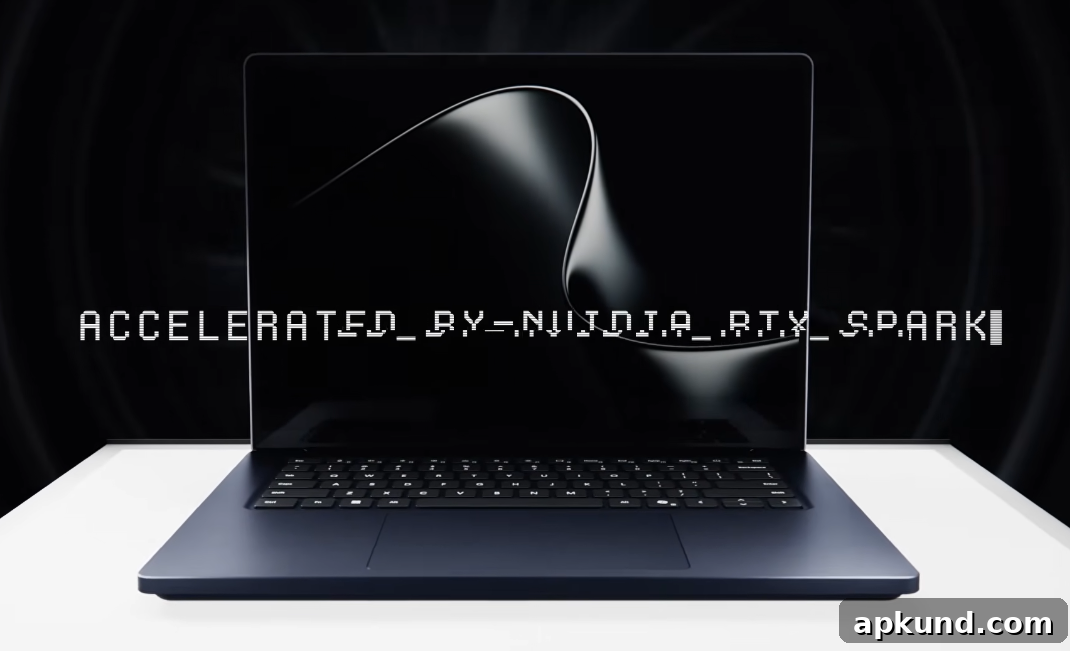
While Windows remains the world’s most widely used desktop operating system, PC makers have spent recent years closing the gap with Apple’s MacBook line on build quality and performance. Microsoft’s new Surface Laptop Ultra aims squarely at that high-performance market. Announced as a workstation-class laptop for creators, developers, and AI engineers, the Surface Laptop Ultra pairs advanced hardware with a design focused on demanding local workloads.
Microsoft developed the Surface Laptop Ultra in partnership with NVIDIA, and one of the headline features is the NVIDIA Blackwell RTX GPU. This discrete GPU supports full CUDA and is paired with a unified memory architecture that Microsoft says can provide up to 128GB of unified memory. The company explains that the unified memory dynamically allocates resources between CPU and GPU to optimize performance for mixed tasks like running large local AI models alongside 3D rendering and multi-model workflows.
According to Microsoft, the unified memory design enables workflows that were previously difficult to run on a single machine. The Surface Laptop Ultra is described as capable of handling local AI models with up to 120 billion parameters while simultaneously managing GPU-intensive creative tasks. In addition to the GPU and memory architecture, Microsoft highlights that the laptop will be powered by NVIDIA’s RTX Spark processor, which the partner companies describe as optimized for contemporary AI workloads.
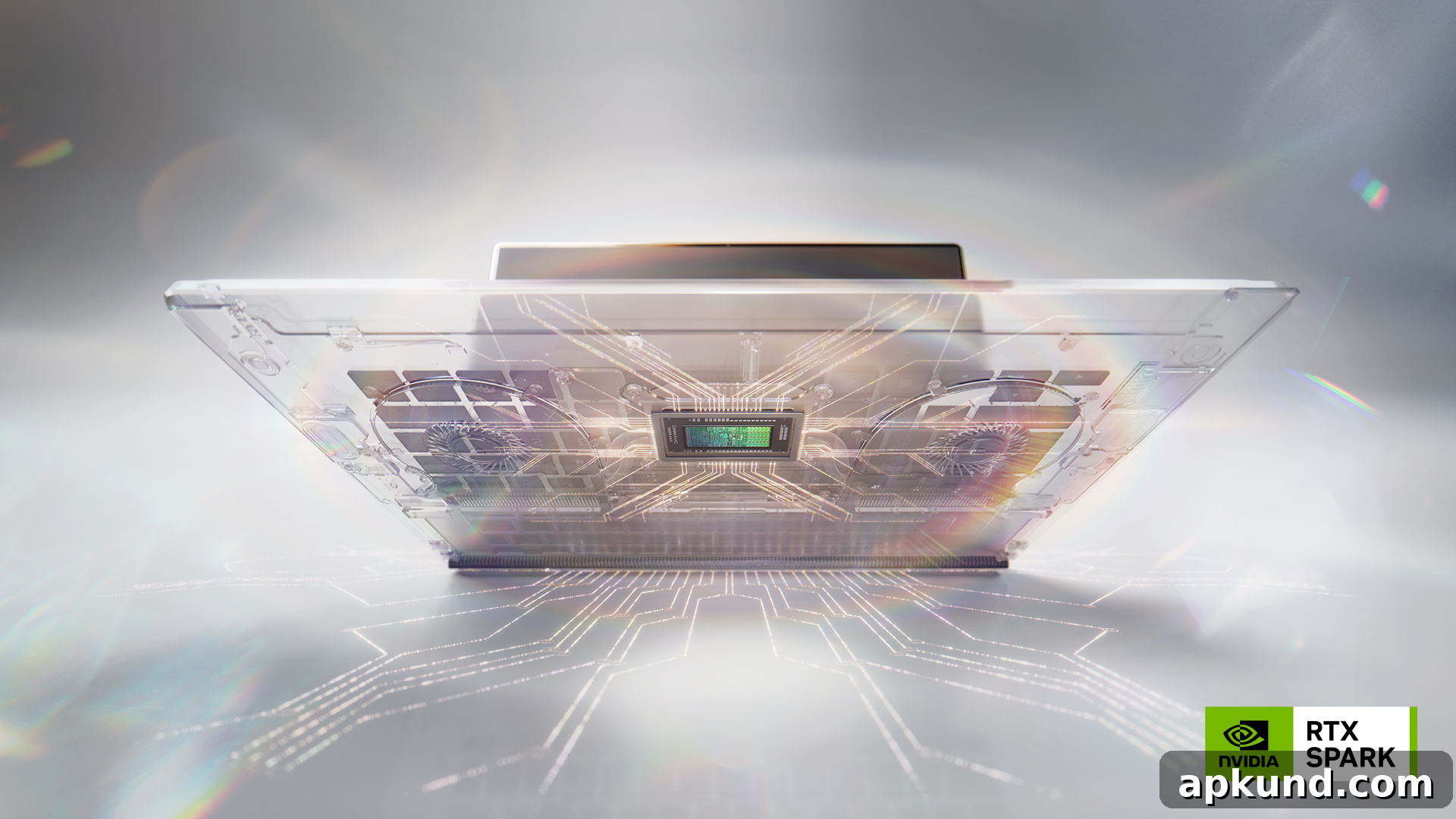
Beyond raw compute, Microsoft focused on system-level engineering to deliver a practical, productive machine. The Surface Laptop Ultra features a redesigned thermal and acoustic system intended to keep the laptop quiet under sustained load while maintaining cooling efficiency. Microsoft also emphasizes battery life, stating the design can deliver all-day usage without forcing users to sacrifice performance for longer runtimes. Those claims indicate attention to power management and thermal trade-offs that are important in mobile workstations.
The display is another major component of the Surface Laptop Ultra package. Microsoft equipped the laptop with a 15-inch mini-LED touchscreen that boasts a high pixel density—reported at 262 pixels per inch—and a peak HDR brightness of 2,000 nits. That combination targets professionals who need accurate color, deep contrast, and exceptional brightness for HDR content creation and visual workflows. The touchscreen layer also adds flexibility for designers and creators who prefer direct interaction with their content.
On the connectivity front, Microsoft has included a broad selection of ports to meet professional needs. The Surface Laptop Ultra offers HDMI, USB-C, USB-A, an SD card reader, and a headphone jack, providing both legacy and modern interfaces for displays, peripherals, storage media, and audio. The inclusion of an SD card reader will be especially welcome among photographers and videographers who routinely transfer media from cameras.
Design and finish options for the Surface Laptop Ultra include Platinum and Nightfall color variants, giving buyers a choice between a lighter and a darker aesthetic. Microsoft has not yet disclosed regional availability or pricing for the new model. As with many flagship devices, those details will likely be announced closer to the product’s shipment date.
The Surface Laptop Ultra clearly targets professionals who need a powerful, portable workstation that can handle AI development, software engineering, 3D rendering, and creative production on a single device. By partnering with NVIDIA and emphasizing unified memory, advanced GPU support, and a high-quality mini-LED display, Microsoft is positioning this model as a competitor to premium laptops aimed at creators and technical users.
Until Microsoft releases formal pricing and availability details, prospective buyers and IT decision-makers should weigh the announced capabilities—high-performance GPU, large unified memory pool, mini-LED touchscreen, improved thermals, and varied port selection—against their specific workflow requirements. The Surface Laptop Ultra appears to be built for people who demand sustained local compute and a premium display, all within a mobile form factor.